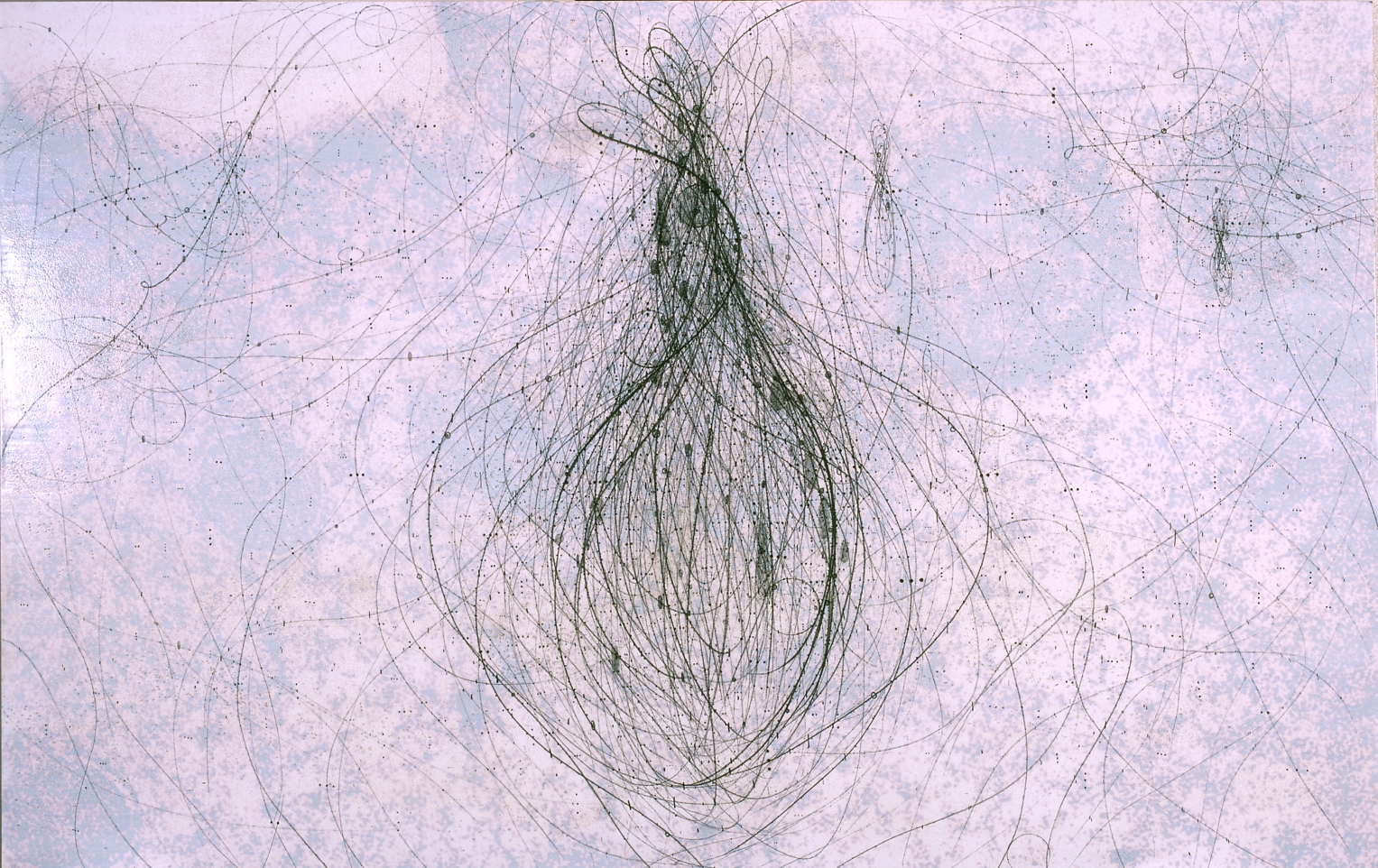
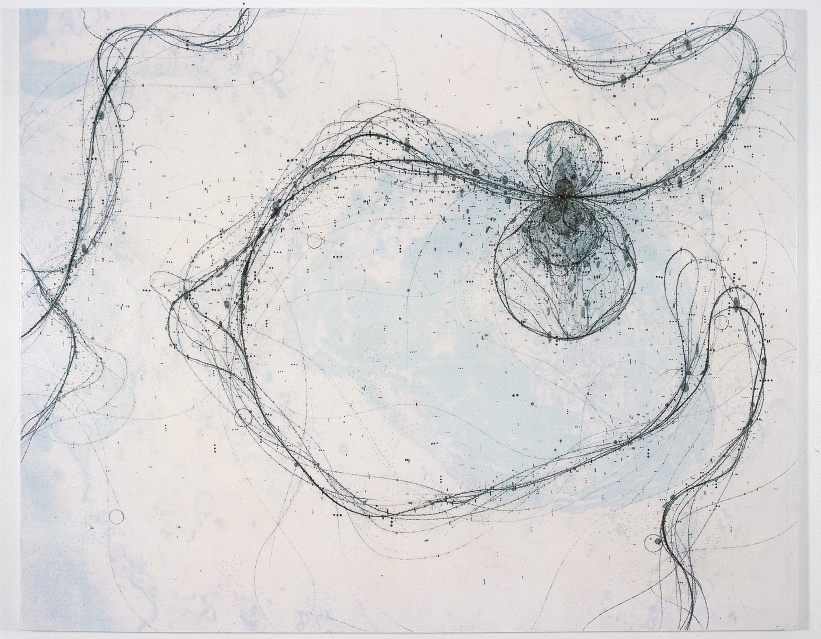
Invisible Space-02102
2002 Mixed Media on Canvas 61 x 97 cm
Provenance
Artist Collection, 2026
About The Work
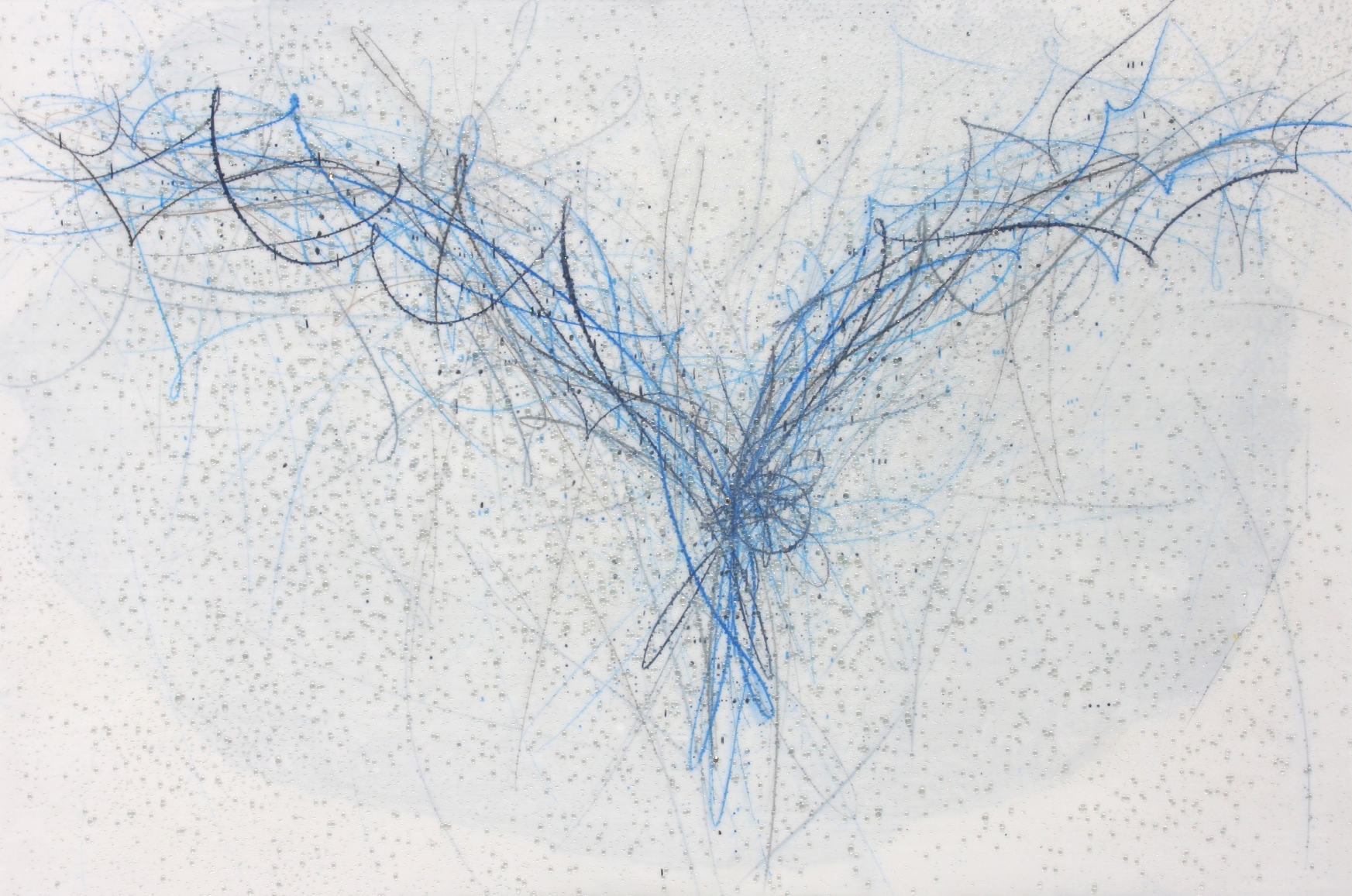
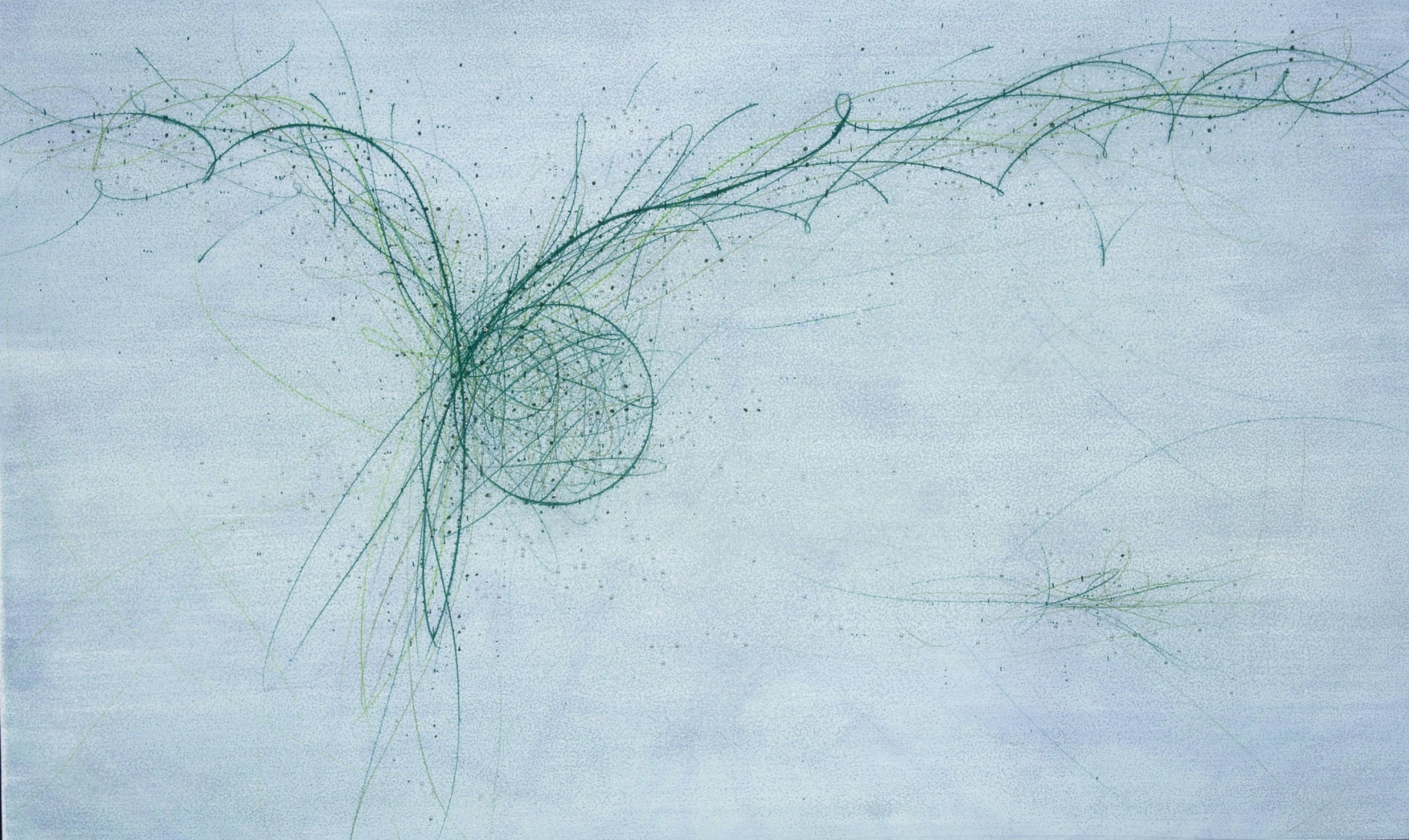
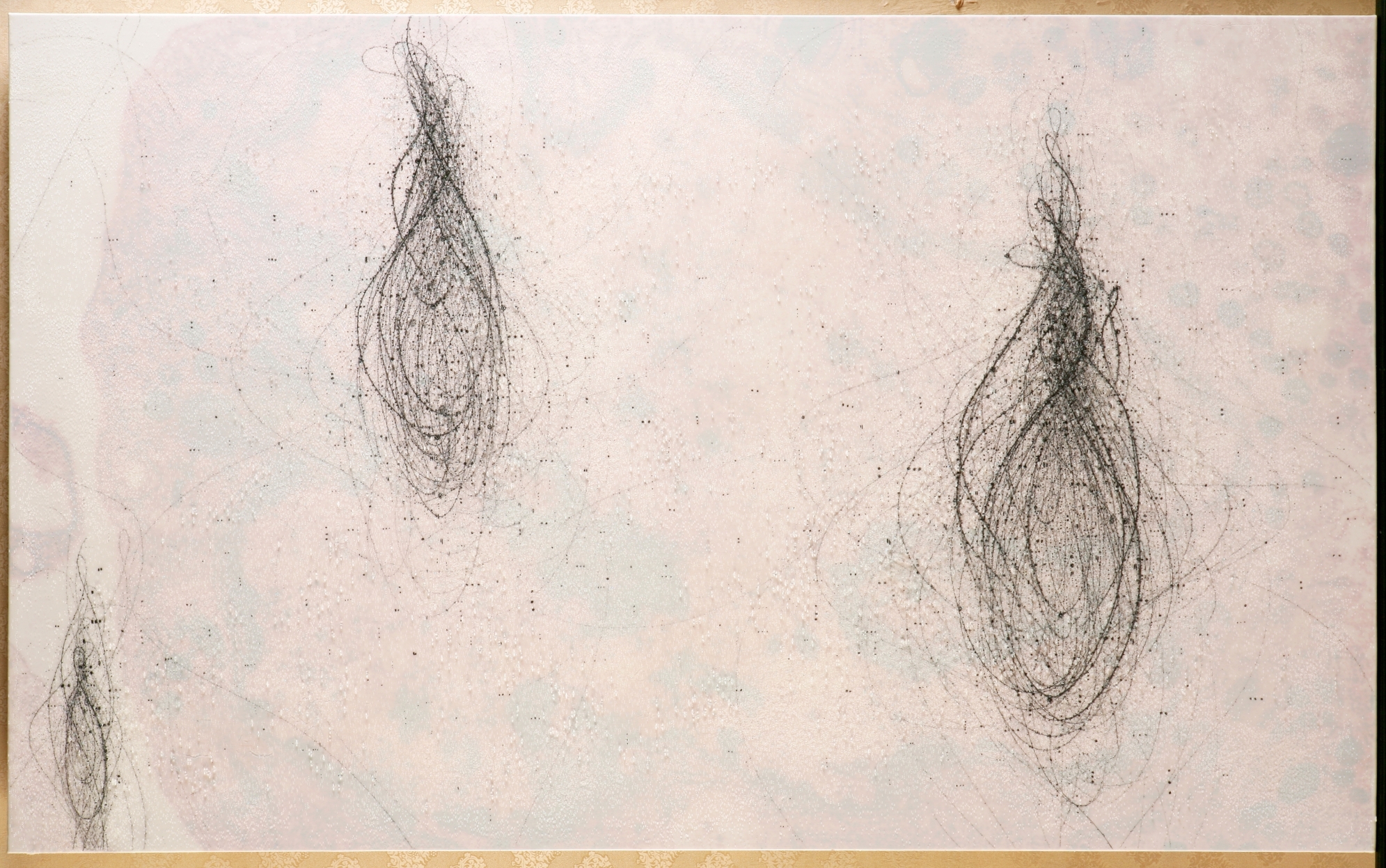
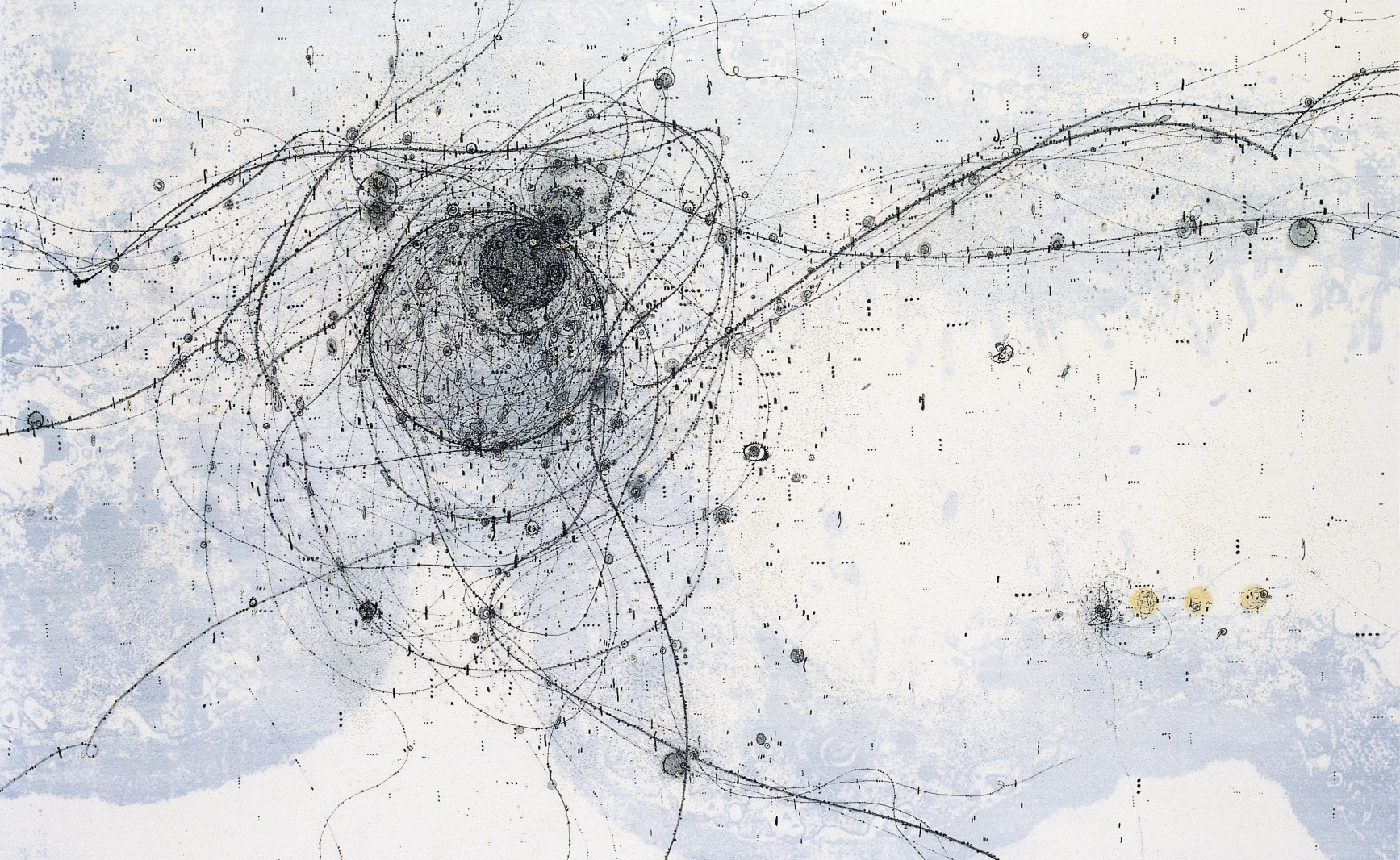
‘Line’ is the most fundamental formal element through which space is generated in Lee Kang Wook’s painting. Rather than outlining forms, lines divide and connect the pictorial field, suggesting directions and flows within invisible space. Accumulated or subtly repeated, lines prevent a fixed viewpoint and guide the viewer’s gaze across shifting spatial relations. In Lee’s work, line functions not as a boundary but as a relational device.
Lee Kangwook’s painting begins with an inquiry into spaces that cannot be directly seen. His long-running series ‘Invisible Space’ explores imaginary spatial realms that originate in microscopic worlds—such as cells and minute particles—yet can expand into vast, almost cosmic scales depending on one’s point of view. Rather than depicting physical or measurable space, Lee investigates spaces that are continuously reconfigured through shifts in perception, proposing painting as a site where alternative worldviews are visually constructed.
In Lee’s work, space is never presented as a stable or fixed structure. Aggregations of color that disperse like particles, repeating geometric forms, and layered gestures disrupt a single, authoritative viewpoint. As a result, the viewer is compelled to constantly recalibrate their sense of scale—moving between the microscopic and the monumental, the interior and the exterior, the flat surface and the illusion of depth. Through this perceptual oscillation, Lee reasserts painting as a sensory field rather than a representational image.
In his recent works, geometric imagery and the formal elements of abstract painting have become more pronounced. Yet despite this structural clarity, drawing remains fundamental to his practice. The artist’s gestures—traces of movement, rhythm, and tempo—function as events within the pictorial space. These marks do not describe a predetermined structure but instead register a space that is in the process of becoming. Lee’s paintings resist closure, remaining open as dynamic configurations that continuously form and dissolve.
Within contemporary Korean art discourse, Lee Kangwook’s practice has been described as “Painting articulated through sensory illusion” and situated within the trajectory of Korean Neo-Abstraction. Such evaluations point not merely to stylistic classification, but to a sustained inquiry into how abstraction can engage perception, cognition, and embodied experience today. Lee’s paintings do not aim to visualize invisible space alone; they ultimately question how we perceive, imagine, and inhabit the world itself.