Criticisms
Double Negation: Lee Kang Wook’s Recent Paintings
2020.08.12
Sook-kyung Lee | TATE Modern Curator
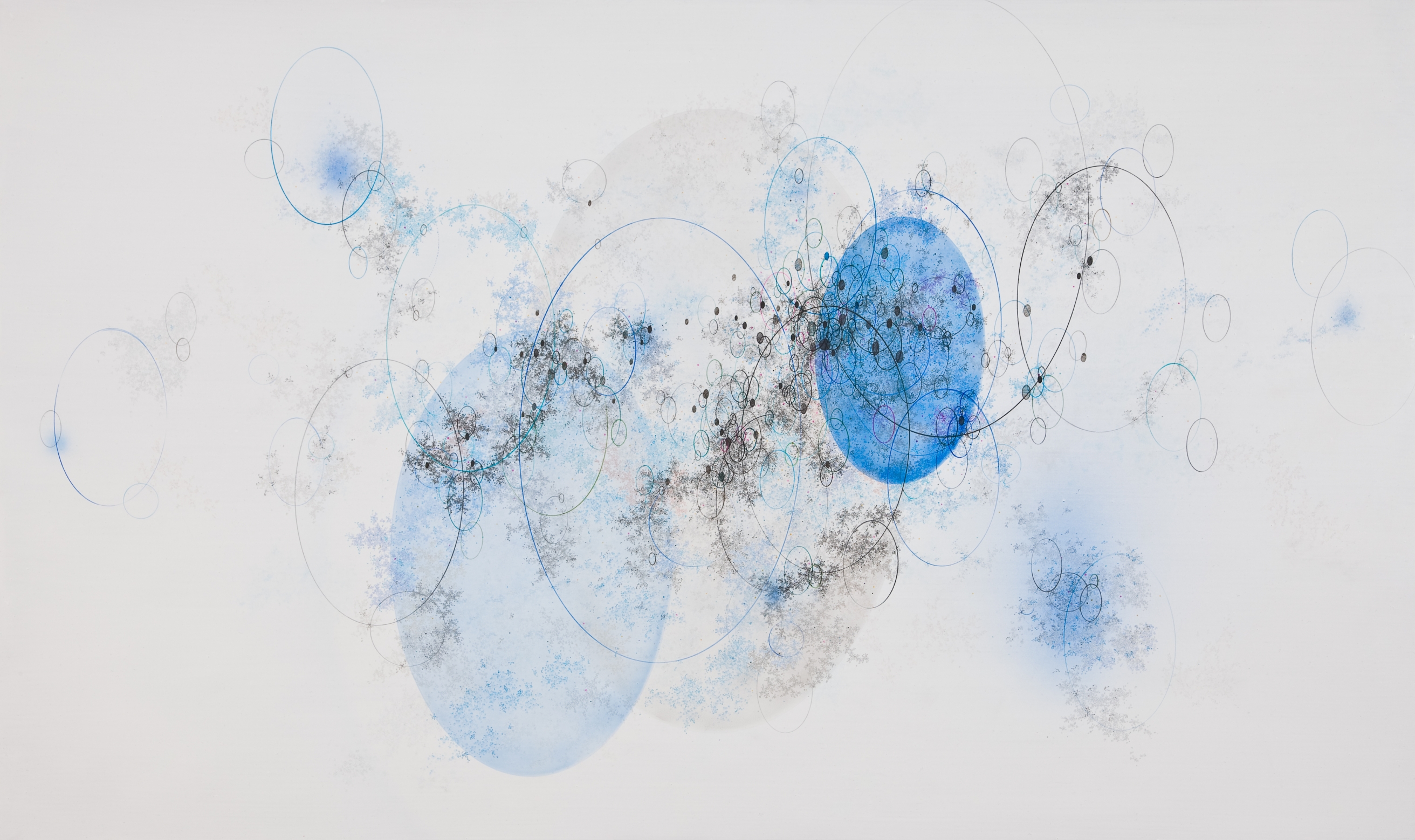
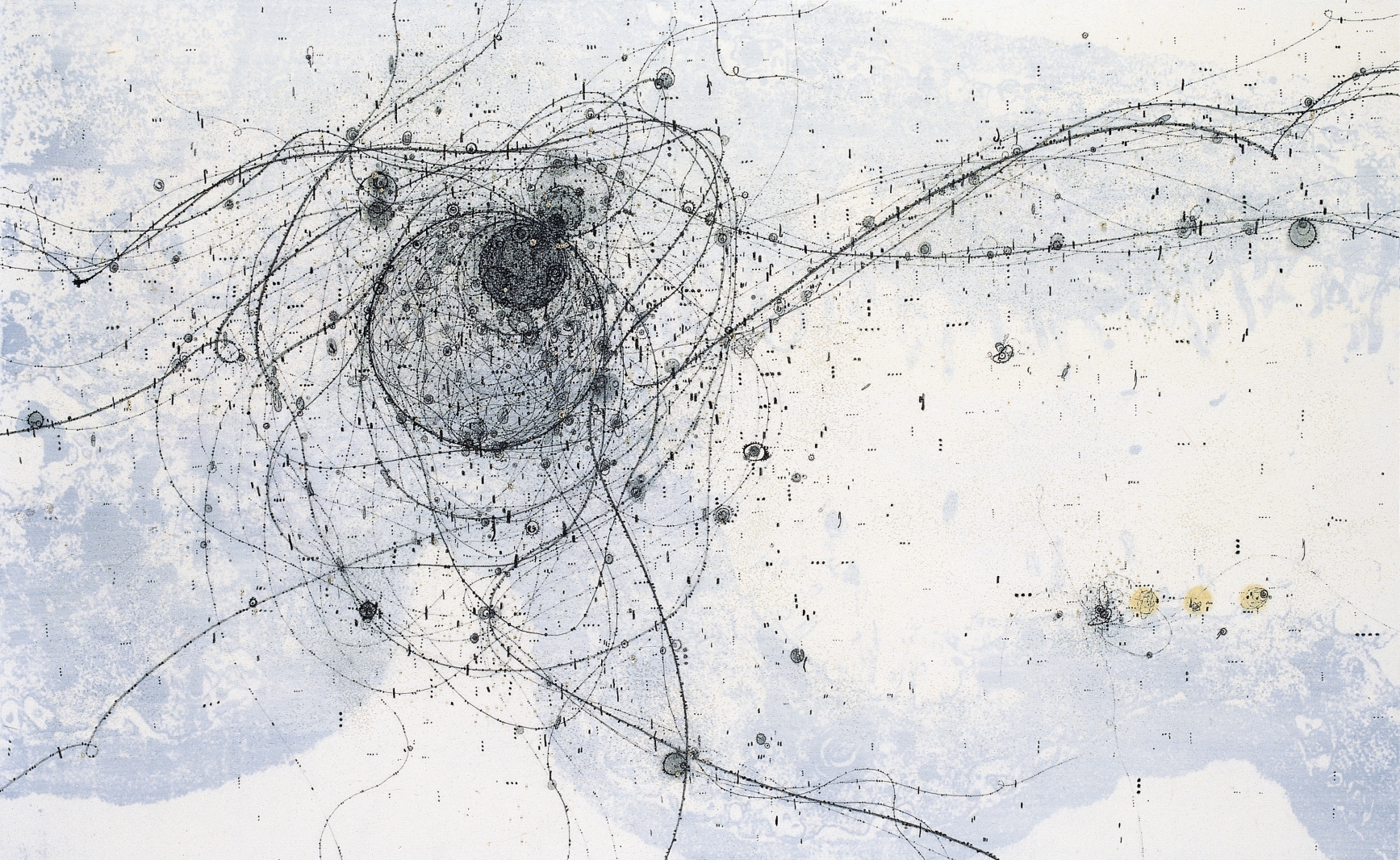
Untitled-11031, 2011, Mixed media on canvas, 90 x 146 cm ©Artist
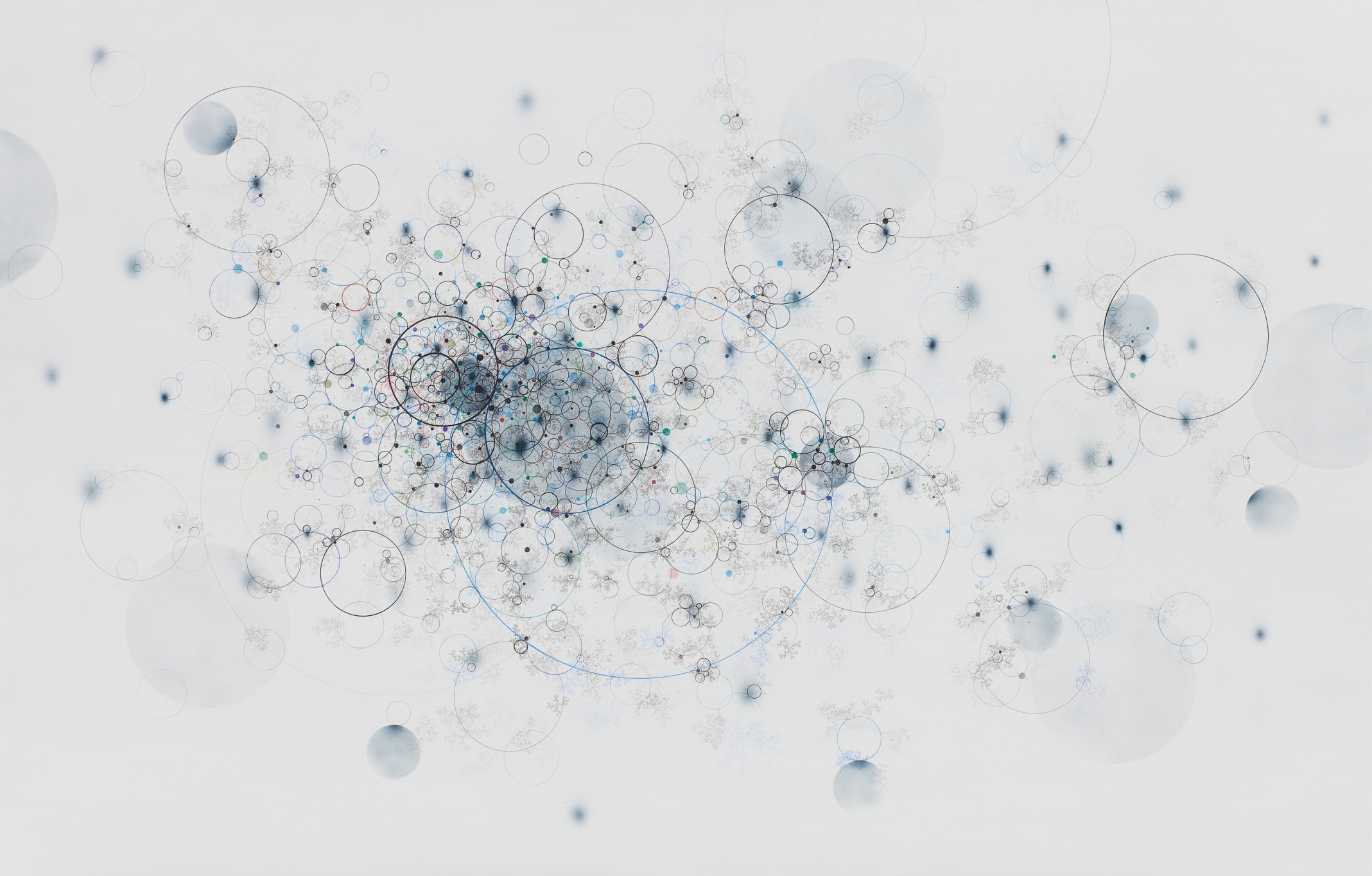
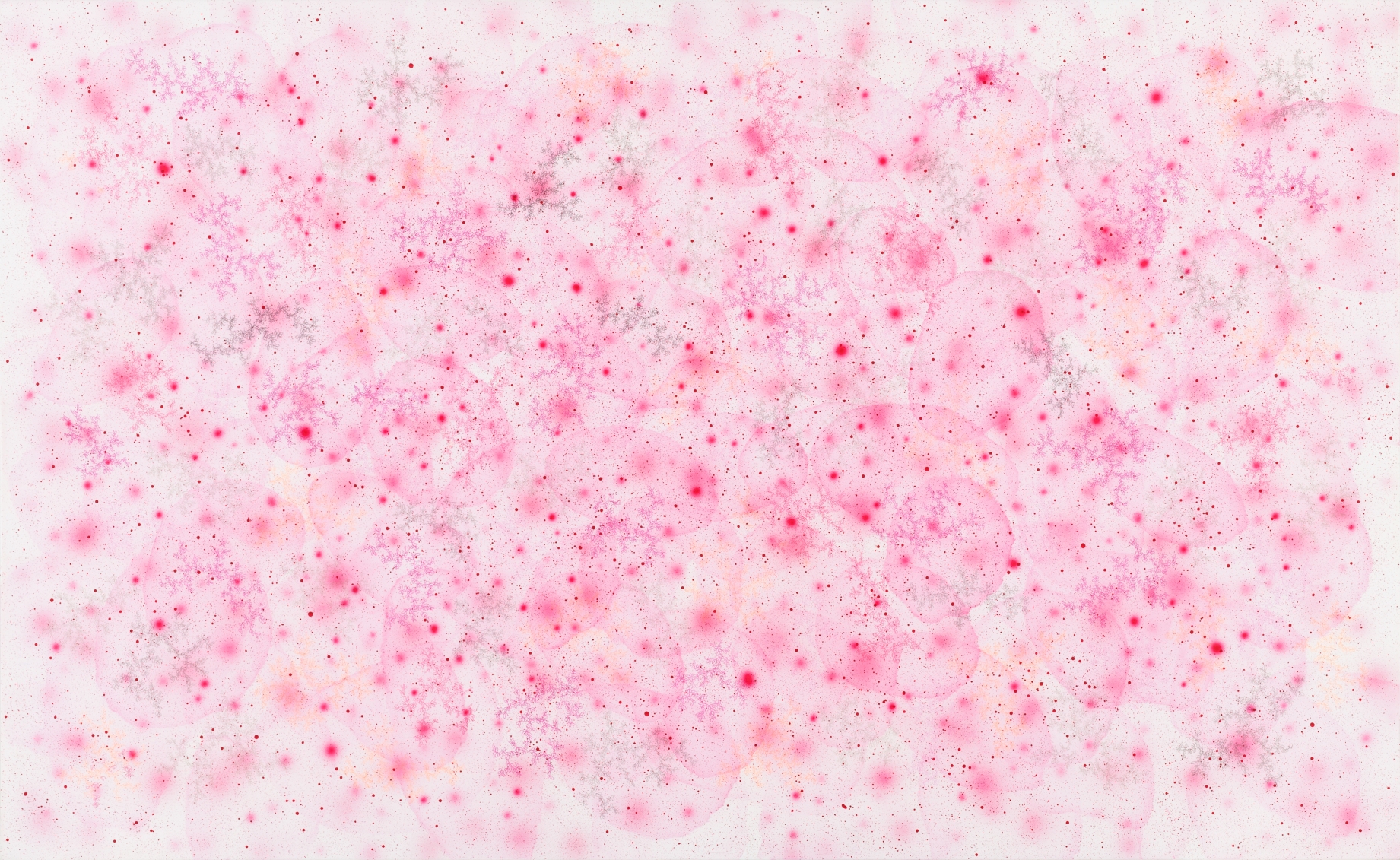
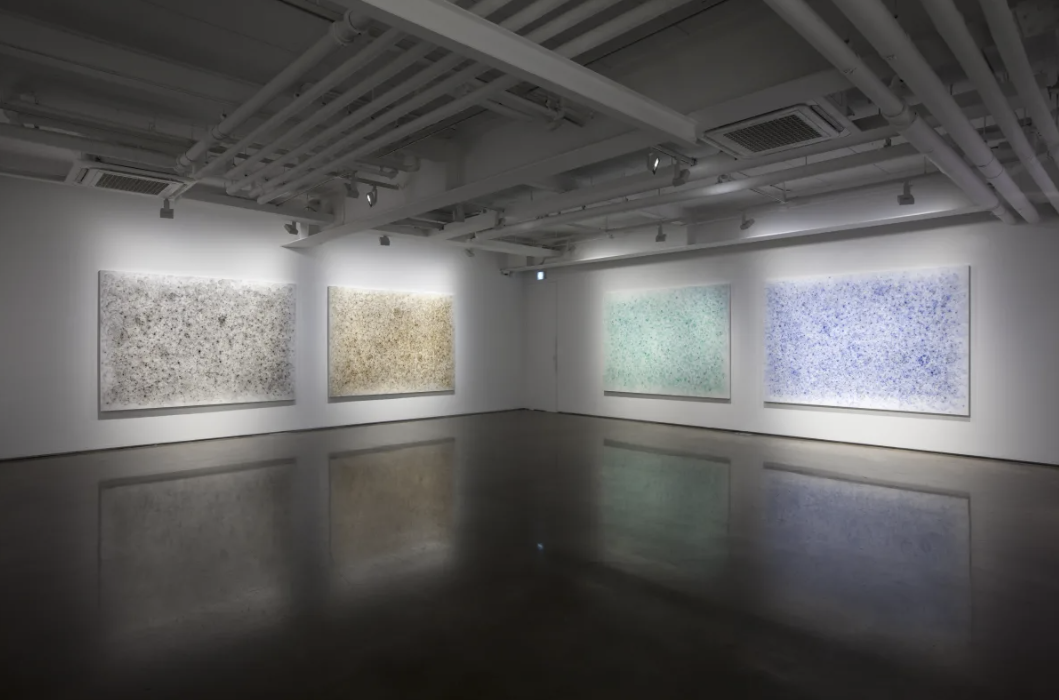
Delicately drawn lines and pale coloured patches are floating on the surface of paintings. Oval and rectangular forms are emerging in different sizes and at times are incomplete, just suggestive enough of these forms, and at other times overlapping each other as if repeating itself in spatial successions. In another group of his paintings, grain-like tiny ovals are multiplying in seemingly infinite numbers, resembling the fractal growth of natural forms, which are at once abstract and organic.
Lee Kang Wook’s work might seem relatively unchanged in terms of its colour tones and abstract forms since his last solo exhibition in 2007. Geometric forms and patterns are more dominant in some of his works and the composition looks more solid, but his exploration of the relativity of perception and ‘invisible space’ still seems relevant, and his apparently effortless execution of imaginary landscape could also be found in the organic spaces of his most recent paintings.
However, there is a decidedly distinctive approach to the images in Lee’s recent paintings, which is the amalgamation, or synthesis, of opposites, rather than their simple dualism. Whilst his previous paintings emphasised the paradoxical resemblance of the microscopic world and cosmic space, Lee’s recent paintings seem to explore a kind of universal order innate in these opposite worlds, allowing controlled yet self-generating patterns and forms to extend what the artist has started with the initial composition.
The paintings sustain abstract forms which Lee has skilfully executed, but their subsequent developments seem purposefully encouraged, making organic yet ordered growths possible. Furthermore, it is noticeable that Lee engages his own physical existence in his latest paintings, marking gestures and bodily movements in several heavily executed pencil lines. Painting seems to be the right medium for Lee, where its limitation becomes a necessary condition for his controlled yet open-ended creation.
Lee’s personal understanding of his recent work also resonates with the change we notice in his new paintings. The artist’s recent interest in ‘Upanishads’, the ancient Hindu philosophy texts, offers an insight, particularly in relation to its world view. According to the Upanishads, there are two important concepts in grasping the world: ‘Brahman’ that is the universal spirit and ‘Atman’, the individual self.
The idea put forth by the Upanishads seers that Brahman and Atman are one and the same is widely regarded as one of the greatest contributions made to the thought of the world. The inherent unity between the seeming opposites and the inevitable possibility of synthesis between the most universal and the most particular seem to have provided the artist with the appropriate answer he had been looking for over several years.
Like his move to London, Lee’s interest in Hindu philosophy could be seen as incidental, or circumstantial at best, in understanding his recent paintings. What is important, however, is his renewed interest in dealing with the opposite worlds of the bigger universe through this thought, where his own presence is as significant and relevant as all things big and small.
Whilst his previous paintings represented the mystery of the universe in its paradoxical dualism, Lee’s recent paintings display the enlightening moment he experienced in understanding the Upanishads, in acquiring knowledge of the self in this incomprehensive universe. However insignificant this might be to the viewer, it seems profoundly important to the artist to appreciate his space in the world and communicate it within his paintings.
Writings